Oshawa Real Estate Negotiation Guide for Best Results
Canadian home buyers often discover that successful negotiation in the Oshawa real estate market depends on preparation more than luck. With average sale prices shifting by thousands of dollars in a single season, understanding local trends becomes essential for anyone hoping to secure the right deal. This guide cuts through the noise to help you research market patterns, assess property values, and communicate offers effectively so you approach every negotiation with clarity and confidence.
Table of Contents
- Step 1: Research Oshawa Market Trends
- Step 2: Assess Property Value And Set Goals
- Step 3: Strategize Your Negotiation Approach
- Step 4: Communicate Offers And Counteroffers Effectively
- Step 5: Verify Agreement And Finalize Deal
Quick Summary
Step 1: Research Oshawa Market Trends
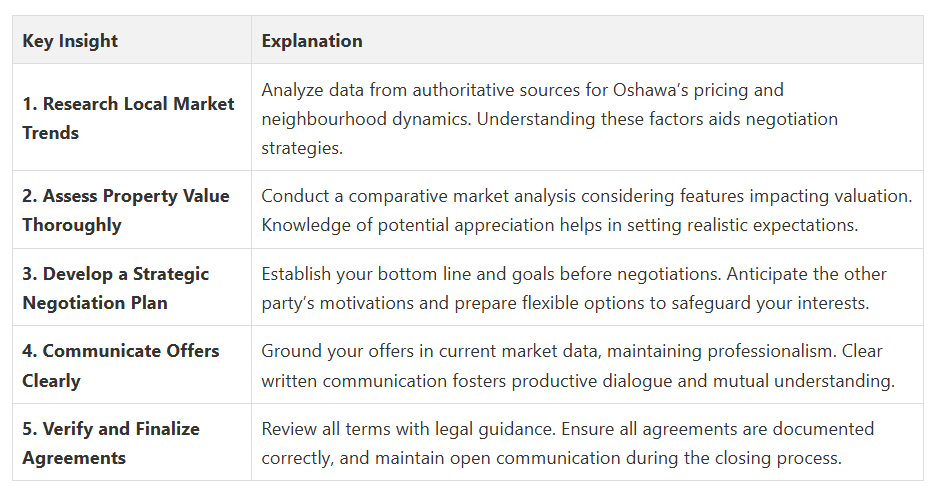
To begin your research, focus on collecting data from multiple authoritative sources. Access recent sales records from the Durham Region Real Estate Board, review published market reports, and examine property value trends specific to different Oshawa neighbourhoods. Pay attention to average sale prices, time on market, listing price to sale price ratios, and seasonal fluctuations that might impact your negotiation strategy. Local real estate websites, municipal records, and professional Oshawa real estate guides can offer valuable statistical information.
Pro tip: Look beyond raw numbers and understand the narrative behind the data. Changes in local infrastructure, upcoming development projects, and community amenities can significantly influence property values. While numbers provide a baseline, context transforms those figures into meaningful negotiation insights.
Your next step involves translating these market trend insights directly into your negotiation preparation, ensuring you approach discussions with comprehensive, data-driven confidence.
Step 2: Assess Property Value and Set Goals
Begin by conducting a comprehensive comparative market analysis that examines recent sales of similar properties in your specific Oshawa neighbourhood. Consider factors such as square footage, property condition, lot size, and unique features that could impact valuation.
Home upgrades that maximize value can significantly influence your property’s market positioning. Pay close attention to Oshawa’s dynamic real estate landscape, particularly in areas experiencing mixed-use development where residential units and commercial components are transforming neighbourhood dynamics.

Pro tip: Your valuation should balance objective market data with strategic goal setting. Consider not just current market value, but potential future appreciation, your immediate financial needs, and the broader context of Oshawa’s evolving real estate market. Understanding these nuanced factors will help you set realistic pricing expectations and negotiate from a position of informed confidence.
With a clear understanding of your property’s value, you are now prepared to develop a targeted negotiation strategy that aligns with your specific real estate objectives.
Step 3: Strategize Your Negotiation Approach
Begin by establishing your absolute bottom line and top line parameters before entering negotiations. This means clearly defining your maximum budget, acceptable closing conditions, and non-negotiable deal breakers. Research proven real estate negotiation techniques to understand how successful buyers and sellers structure their conversations. Consider potential scenarios in advance, anticipating the other party’s likely motivations and potential objections. Prepare multiple strategic options that provide flexibility while protecting your core interests.
Pro tip: Emotional control is your secret weapon in negotiations. Remain calm, professional, and objective regardless of provocative statements or unexpected counteroffers. Your composure demonstrates confidence and increases the likelihood of achieving a mutually beneficial agreement. Practice active listening and ask clarifying questions that reveal the underlying interests behind stated positions
.With a well-structured negotiation strategy in place, you are now prepared to engage confidently and strategically in real estate discussions.
Step 4: Communicate Offers and Counteroffers Effectively
When presenting your initial offer, ground it in objective market data that reflects current trends. Consider the changing market conditions where Oshawa home prices experienced a subtle decline from $806,000 to $796,574. Craft your offer with a strategic blend of market insights and personal negotiation goals. Use written communication that is professional, concise, and leaves room for constructive dialogue. Include specific terms beyond price, such as preferred closing dates, included appliances, or potential repair considerations.
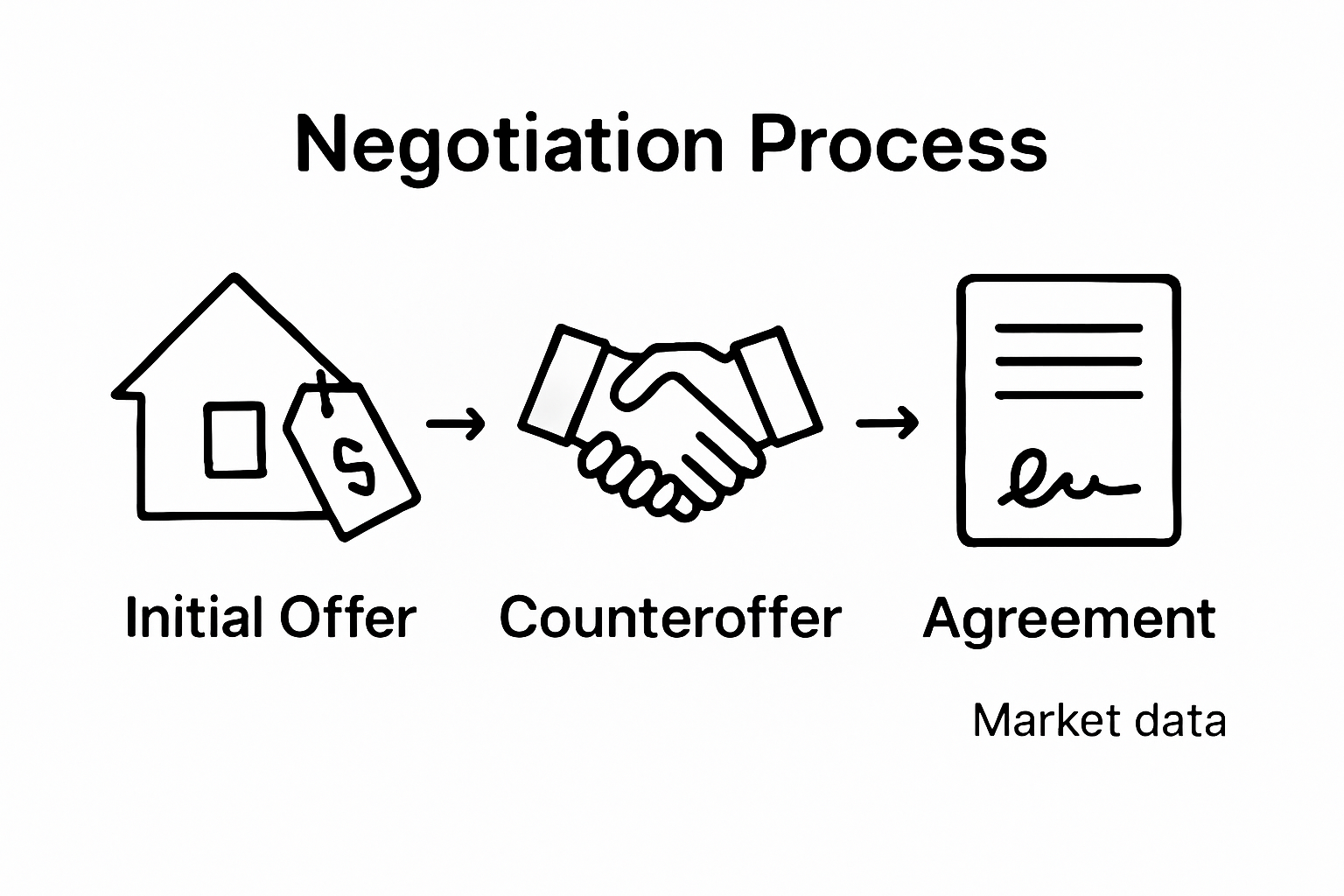
Pro tip: Effective negotiation is about understanding motivations. Listen carefully to the other party’s responses and read between the lines. Your written and verbal communication should demonstrate respect, flexibility, and a genuine desire to reach a mutually beneficial agreement. Avoid emotional language or confrontational tones that could derail potential progress.
With your offer strategically communicated, you are now prepared to navigate the nuanced landscape of real estate negotiations.
Step 5: Verify Agreement and Finalize Deal
Carefully review all documented terms with a legal professional to ensure every aspect of the agreement protects your interests. This includes examining purchase price, contingencies, closing dates, included property features, and any special conditions negotiated during previous discussions. Confirm that all verbal agreements are accurately reflected in the written contract. Schedule a final property walkthrough to verify the condition of the property matches your expectations and any agreed-upon repairs or modifications have been completed.

Pro tip: Maintain open communication channels with all parties involved, including your real estate agent, lawyer, and the other party.
Unexpected complications can arise in the final stages of a transaction, and proactive communication helps resolve potential issues quickly.
Ensure all financial arrangements are confirmed, including mortgage approvals, funds transfer mechanisms, and closing cost allocations.
With the agreement verified and finalized, you are now prepared to complete your real estate transaction and take possession of your new property.
Master Oshawa Real Estate Negotiations with Expert Guidance
Take the next step towards negotiation success by leveraging the personalized support available at Fanis.ca. Gain access to in-depth neighbourhood analysis, tailored negotiation strategies, and professional advice designed specifically for the Toronto and Durham Region markets.

Ready to turn negotiation obstacles into opportunities? Visit Fanis Makrigiannis’ real estate platform today to explore featured properties and expert resources. Connect directly with Fanis for a customized plan that aligns with your goals and ensures you negotiate with confidence. Begin your journey to real estate success now by visiting Fanis Makrigiannis’ website.
Frequently Asked Questions
What are the key market trends to consider when negotiating in Oshawa real estate?
How can I accurately assess the value of a property in Oshawa?
What strategies should I use to enhance my negotiation approach in Oshawa’s competitive market?
How can I effectively communicate offers and counteroffers during negotiations?
What steps should I take to finalize my real estate agreement in Oshawa?
How can I prepare for unexpected complications in the final stages of a real estate transaction?
About the author:

Fanis Makrigiannis is a trusted Realtor with RE/MAX Rouge River Realty Ltd., specializing in buying, selling, and leasing homes, condos, and investment properties. Known for his professionalism, market expertise, and personal approach, Fanis is a Real Estate agent in the Durham region and is committed to making every real estate journey seamless and rewarding.
He understands that each transaction represents a significant milestone and works tirelessly to deliver outstanding results.
With strong negotiation skills and a deep understanding of market trends, Fanis fosters lasting client relationships built on trust and satisfaction.
Proudly serving the City of Toronto • Ajax • Brock • Clarington • Oshawa • Pickering • Scugog • Uxbridge • Whitby • Prince Edward County • Hastings County • Northumberland County • Peterborough County • Kawartha Lakes