
7 Essential Real Estate Negotiation Tips for Oshawa Buyers
Over eighty percent of Canadian homebuyers report that local market knowledge shapes their negotiation success. For anyone stepping into the Oshawa real estate scene, understanding the unique trends and seller motivations in this area can make all the difference. This guide breaks down proven strategies tailored to the Oshawa market, offering practical tips for Canadian buyers looking to secure the best deal on their next home.
Table of Contents
- Understand The Local Market Dynamics In Oshawa
- Identify Your Key Priorities Before Negotiating
- Use Market Data To Strengthen Your Offer
- Evaluate Seller Motivations For Better Outcomes
- Respond Effectively To Counteroffers
- Leverage Inspection Results To Your Advantage
- How A Real Estate Agent In Oshawa Helps You Succeed
Quick Summary
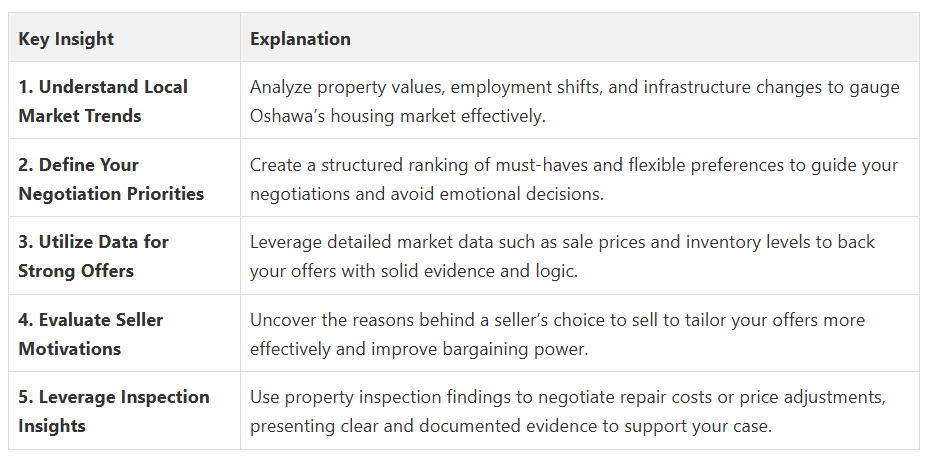
1. Understand the Local Market Dynamics in Oshawa
The Durham Region, and Oshawa specifically, presents unique real estate characteristics that demand strategic insight. Navigating the local market requires understanding neighbourhood trends, property valuations, and competitive pricing strategies that go beyond surface-level observations.
Oshawa’s real estate market is influenced by several factors, including proximity to Toronto, local employment trends, infrastructure developments, and demographic shifts. Buyers need to recognize how these elements interconnect and impact property values. For instance, the ongoing expansion of automotive and manufacturing sectors significantly affects housing demand and pricing in specific neighbourhoods.
To truly understand market dynamics, prospective buyers should track key metrics such as average days on market, list-to-sale price ratios, inventory levels, and seasonal fluctuations. These indicators provide critical insights into negotiation leverage and potential investment opportunities.
Pro tip: Attend local open houses and community meetings to gain first-hand insights into Oshawa’s evolving real estate landscape and develop a nuanced understanding of neighbourhood-specific trends that spreadsheets cannot capture.
2. Identify Your Key Priorities Before Negotiating
Identifying client needs and behavioural patterns is fundamental to effective real estate communication and negotiation strategies, which means buyers must conduct thorough self-reflection before engaging with sellers. This involves creating a comprehensive list of non-negotiable requirements and areas where flexibility exists.
Your priority list should encompass multiple dimensions beyond purchase price. Consider elements like closing dates, home condition, included appliances, potential repairs, and neighbourhood-specific preferences. Some buyers prioritise move in readiness, while others might focus on investment potential or proximity to specific amenities.
To develop a robust priority framework, create a structured ranking system. Start by categorizing your requirements into three tiers: absolute must-haves, strong preferences, and nice-to-have features. This approach provides clarity during negotiations and helps prevent emotional decision-making that could compromise your long-term objectives.
When working with Fanis Makrigiannis Realty, we recommend creating a prioritized checklist that allows systematic evaluation of potential properties. This method ensures you remain focused on your core objectives while maintaining negotiation flexibility.
Pro tip: Write down your top five non-negotiable home-buying criteria before beginning your search and review them periodically to ensure they remain aligned with your evolving needs and market realities.

3. Use Market Data to Strengthen Your Offer
Real estate transactions in Oshawa require a nuanced understanding of local market dynamics, which means buyers must go beyond surface-level property evaluations. Comprehensive market data analysis involves examining recent sales prices, average days on market, price per square metre, and historical valuation trends specific to different Oshawa neighbourhoods.
To effectively leverage market data, buyers should compile detailed comparative market analyses that highlight property valuation metrics. This approach involves tracking recent sales of similar properties within a 1-kilometre radius, understanding seasonal market fluctuations, and identifying potential negotiation leverage points based on objective statistical evidence.
Critical data points include list-to-sale price ratios, inventory levels, median home prices, and neighbourhood-specific appreciation rates. By presenting sellers with well-researched, statistically supported offer rationales, buyers demonstrate serious intent and a professional approach to their property acquisition strategy.
Buyers can access market data through multiple channels: local real estate board reports, online property databases, municipal assessment records, and professional real estate consultations. Each data source provides unique insights that contribute to a comprehensive market understanding.
Pro tip: Create a spreadsheet tracking neighbourhood property sales over the past six months to identify pricing trends and develop a statistically informed negotiation strategy.
4. Evaluate Seller Motivations for Better Outcomes
Understanding human behaviour and communication patterns is fundamental to effective real estate negotiations, which means buyers must develop keen observational and listening skills. Sellers might be motivated by diverse factors beyond simple financial transactions, such as job relocation, estate settlement, relationship changes, or urgent financial needs.
To effectively evaluate seller motivations, buyers should employ active listening techniques and ask strategic open-ended questions. Pay attention to verbal and non-verbal cues that reveal underlying pressures or constraints. For instance, a property that has been listed for an extended period might indicate the seller is experiencing increased urgency or financial strain.
Buyers can gather motivational insights through multiple channels: examining property history, understanding listing duration, observing home maintenance levels, and engaging in respectful dialogue with the seller or their representative. Each interaction provides potential clues about the seller’s psychological and practical drivers for selling their property.
Recognizing seller motivations allows buyers to craft more compelling offers that address not just financial considerations but also the seller’s broader personal and emotional needs. This approach transforms negotiations from transactional interactions to collaborative problem-solving opportunities.
Pro tip: Request a professional home viewing that allows you to observe subtle details about the property and engage in meaningful conversation with the seller or their agent to uncover underlying motivational factors.
5. Respond Effectively to Counteroffers
Professional negotiation techniques emphasize maintaining composure and professionalism when addressing counteroffers, which means buyers must approach these interactions with a measured strategy rather than reactive emotion. Each counteroffer presents an opportunity to realign expectations and move closer to a mutually beneficial agreement.
Effective counteroffer responses involve three fundamental strategies: understanding the seller’s underlying motivations, quantifying the proposed changes objectively, and developing a response that addresses both financial and emotional considerations. This means carefully analyzing each proposed modification to your original offer and determining its potential impact on your overall purchasing goals.
Buyers should create a structured evaluation framework that assesses counteroffers across multiple dimensions. Consider factors such as price adjustments, closing date modifications, included property features, potential repair concessions, and financing contingencies. Each element requires scrutiny to ensure alignment with your initial property acquisition strategy.
Successful negotiators recognize that counteroffers are collaborative problem-solving opportunities rather than adversarial confrontations. By maintaining respectful communication and demonstrating a willingness to find creative solutions, buyers increase their probability of securing favourable transaction terms.
Pro tip: Develop a predetermined negotiation threshold before receiving counteroffers that clearly defines your maximum acceptable price and non-negotiable terms to prevent emotional decision-making during high-pressure moments.
6. Leverage Inspection Results to Your Advantage
Professional negotiation techniques emphasize presenting multiple solutions when addressing inspection-related concerns, which means buyers must approach these discoveries with a nuanced strategy and creative problem-solving skills. Inspection results are not roadblocks but potential negotiation leverage points.
Buyers should categorize inspection findings into three strategic tiers: critical structural issues, moderate repair requirements, and minor cosmetic concerns. Each category offers different negotiation approaches. Critical structural problems might warrant a request for price reduction or seller-funded repairs, while minor issues could be addressed through targeted negotiations or future maintenance planning.

Effective inspection result leveraging involves preparing a comprehensive yet balanced approach. Compile a detailed report highlighting specific concerns, estimated repair costs, and potential impact on property value.
This professional documentation serves as a powerful negotiation tool that demonstrates your thoroughness and commitment to making an informed purchasing decision.
Successful negotiators recognize that inspection findings are not about winning or losing but finding mutually acceptable solutions.
By presenting repair concerns professionally and offering constructive alternatives, buyers can maintain positive relationships with sellers while protecting their investment interests.
Pro tip: Request multiple repair cost estimates from certified professionals to provide sellers with credible documentation when negotiating inspection-related adjustments.
7. How a Real Estate Agent in Oshawa Helps You Succeed
Professional real estate practitioners develop advanced negotiation skills that directly contribute to client success, transforming what could be an overwhelming process into a streamlined, strategic journey. Experienced agents bring a nuanced understanding of local market dynamics, pricing strategies, and negotiation techniques that individual buyers cannot easily replicate.
Your Real Estate Agent provides critical support across multiple transaction dimensions. They conduct comprehensive market analyses, identify potential properties matching your specific criteria, interpret complex legal documentation, and develop negotiation strategies tailored to your unique purchasing objectives. Their local knowledge allows them to uncover insights about neighbourhood trends, potential property value appreciation, and hidden market opportunities.
Beyond transactional support, a professional Real Estate Agent acts as your strategic advisor. They can help you understand market fluctuations, evaluate property conditions, interpret inspection results, and develop robust negotiation approaches that protect your financial interests. Their expertise transforms potential challenges into opportunities for securing optimal purchasing terms.
Professional agents also provide an emotional buffer and objective perspective during high-stakes real estate transactions. By maintaining professional composure and leveraging their extensive network of industry connections, they help buyers navigate complex negotiations with confidence and strategic precision.
Pro tip: Request a detailed consultation with your Real Estate Agent to establish clear communication protocols and define your specific purchasing goals before beginning your property search.
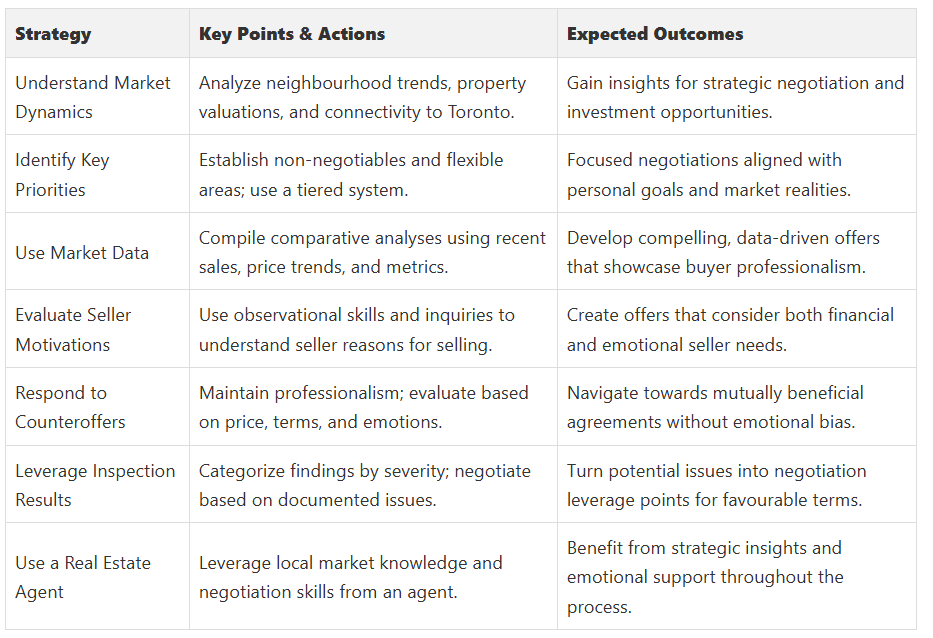
Below is a comprehensive table summarizing strategies and insights for successful real estate negotiations in Oshawa.
Master Your Oshawa Real Estate Negotiations with Expert Guidance

Discover how working with a professional Real Estate Agent in Oshawa can empower you with tailored strategies and detailed market data to sharpen your offers and confidently handle counteroffers. Visit Fanis Makrigiannis Realty today to explore available homes, access expert neighbourhood insights, and start your journey with personalized negotiation support. Don’t wait for the perfect property to slip away. Take action now and turn those 7 essential negotiation tips into successful results.
Frequently Asked Questions
How can I understand the local market dynamics in Oshawa before negotiating?
What key priorities should I identify before starting my real estate negotiations?
How can I effectively use market data to strengthen my offer in Oshawa?
What steps should I take to evaluate seller motivations during negotiations?
How should I respond to counteroffers during the negotiation process?
How can I leverage property inspection results in my negotiations?
About the author:

Fanis Makrigiannis is a trusted Realtor with RE/MAX Rouge River Realty Ltd., specializing in buying, selling, and leasing homes, condos, and investment properties. Known for his professionalism, market expertise, and personal approach, Fanis is a Real Estate agent in the Durham region and is committed to making every real estate journey seamless and rewarding.
He understands that each transaction represents a significant milestone and works tirelessly to deliver outstanding results.
With strong negotiation skills and a deep understanding of market trends, Fanis fosters lasting client relationships built on trust and satisfaction.
Proudly serving the City of Toronto • Ajax • Brock • Clarington • Oshawa • Pickering • Scugog • Uxbridge • Whitby • Prince Edward County • Hastings County • Northumberland County • Peterborough County • Kawartha Lakes
Recommended
- Oshawa Real Estate Negotiation Guide for Best Results - Fanis Makrigiannis Realtor®
- 7 Steps for a Smart Real Estate Checklist Oshawa Guide - Fanis Makrigiannis Realtor®
- 7 Top Real Estate Marketing Tips in Oshawa - Fanis Makrigiannis Realtor®
- Complete Guide to the Home Buyer Process in Oshawa - Fanis Makrigiannis Realtor®
- Rôle de l’avocat en transaction immobilière : Sécurité et optimisation – Avocat Immobilier Paris
- Small Garages: A Deal Breaker in Real Estate - Living on the Côte d’Azur