
What credit score do you need to buy a house in Ontario?
What credit score do you need to buy a house in Ontario?
For many buyers, a credit score of 680 or higher puts you in a stronger position with traditional lenders. That range often gives you access to more competitive mortgage options and a smoother approval process. If your score is between 600 and 679, you may still qualify, but your choices can narrow, and the terms may not be as favourable.
Some lenders will consider borrowers with scores below 600, especially through alternative lending channels, but that usually comes with higher interest rates, additional fees, or stricter conditions. So the honest answer is that there isn't one single magic number. There is a minimum where approval might still be possible, and there is a more comfortable range where approval tends to be easier and less expensive.
If you're buying with a partner, lenders may look at both credit profiles, but the lower score can still affect the application. A strong co-borrower helps, but it does not always cancel out weaker credit.
Why your credit score matters so much
Your credit score helps lenders estimate risk. A higher score suggests a history of paying debts on time and managing credit responsibly. A lower score can signal missed payments, high balances, or financial instability, even if your income is solid today.
That matters because mortgage lenders are not just deciding whether to approve you. They are also deciding how much to lend, what rate to offer, and whether your file fits their internal guidelines. Two buyers with the same income can get very different mortgage results based on credit alone.
In practical terms, a stronger score can help you qualify with a major lender, keep your monthly payment lower, and avoid relying on alternative financing. A weaker score can mean higher borrowing costs over time, which affects affordability just as much as the home price does.
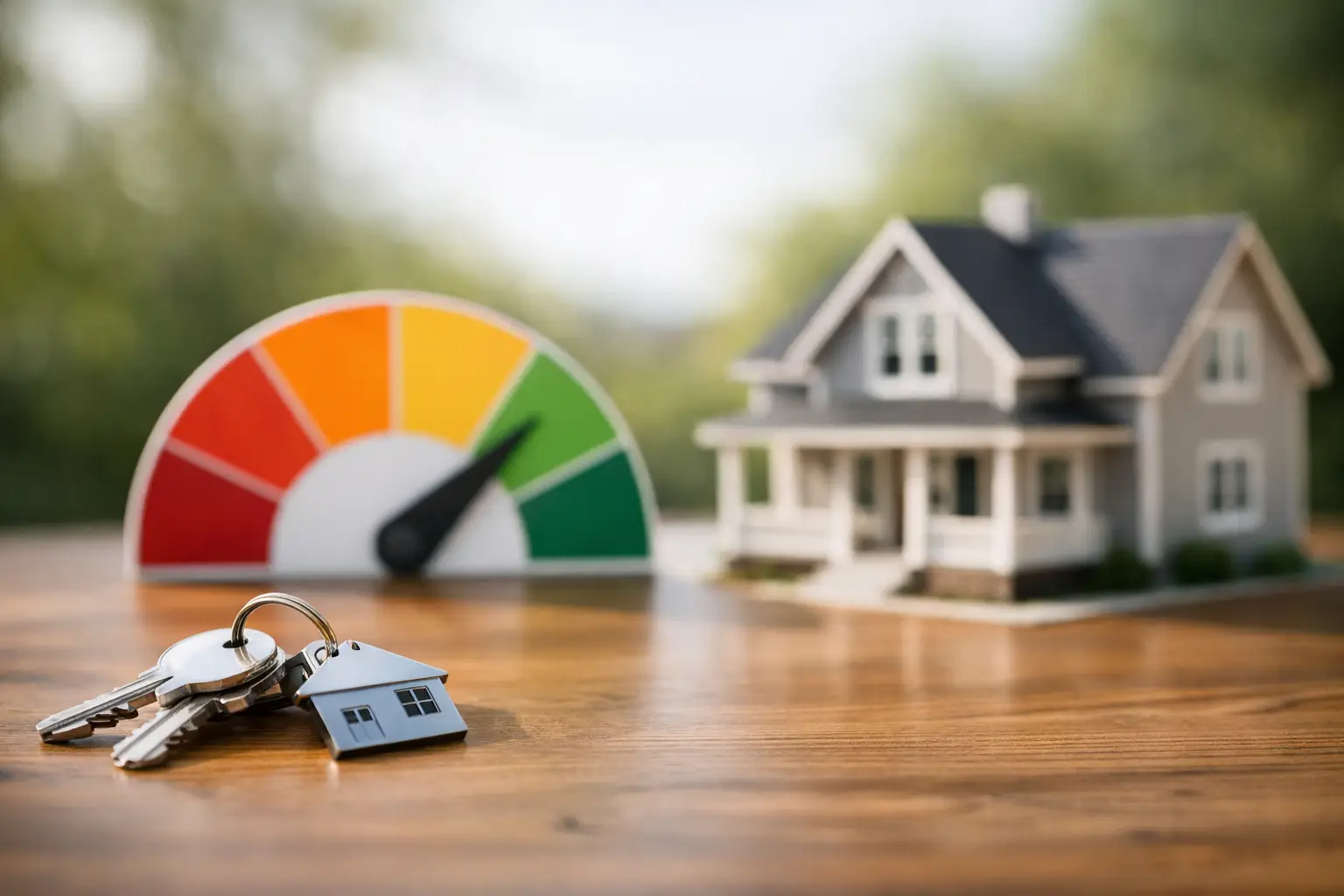
Credit score is not the whole approval story
One of the biggest misconceptions buyers have is that if their credit score is high enough, they are set. In reality, lenders look at the full picture.
Income is a major factor. So are your monthly debt obligations, employment history, down payment amount, and the property itself. A buyer with a 720 credit score but too much debt may have more trouble than a buyer with a 660 score and very strong income stability.
Lenders also pay close attention to your debt service ratios. These ratios measure how much of your income goes toward housing costs and other debts. If you carry large car payments, lines of credit, or credit card balances, those can reduce what you qualify for even when your score looks decent.
This is why mortgage pre-approval matters. It gives you a realistic sense of your buying range before you start making decisions around listings, neighbourhoods, and offer strategy.
Down payment rules can change the credit conversation
In Ontario, the amount you put down can affect which mortgage products are available and how closely lenders examine your file. Buyers with less than 20% down usually need mortgage default insurance. That insured mortgage can sometimes come with stricter credit expectations from lenders and insurers.
In many cases, insured mortgages work best when at least one borrower has a credit score in the mid-600s or higher. Some lenders prefer 680 and up for cleaner approvals. That does not mean lower scores are impossible, but flexibility tends to shrink.
If you have 20% or more down, you may have more options with conventional financing or alternative lenders. That can help if your score is not ideal, but it is not a guaranteed workaround. Lenders still want to see that the borrower can handle the payments.
This is where buyers sometimes get surprised. They save aggressively for a down payment but assume cash alone solves everything. It helps, absolutely, but weak credit can still change the outcome.
What score range puts you in the best position?
If you want a practical benchmark, aim for 680 or above. That does not guarantee the best rate in every case, but it generally puts you in a healthier lending category.
A score from 720 to 760 and above is even better. At that level, assuming your income and debts are in good shape, your application tends to look more straightforward. You may have access to more lender options and better pricing.
 If your score is 600 to 679, you are in a range where buying may still be realistic, but preparation matters more. You may need to reduce balances, explain past credit issues, or work with a mortgage professional who knows how to place more complex files.
If your score is below 600, it is often worth pausing before house hunting unless your income, assets, and down payment are especially strong.
In many cases, a short period of credit improvement can lead to much better financing results.
How to improve your credit score before buying
If homeownership is a near-term goal, credit repair should be focused and practical, not random. The fastest gains often come from lowering revolving debt, especially credit card balances. High utilization can drag down your score even if you pay on time.
Payment history is critical. If you have missed payments, getting fully current and staying current matters more than almost anything else. New late payments are far more damaging than older ones.
It also helps to avoid opening several new accounts right before applying for a mortgage. Too many credit inquiries or new obligations can make lenders nervous. The same goes for financing a car or taking on a major personal loan before trying to buy a home.
Check your credit report for errors as well. Incorrect balances, old collections that should have been removed, or accounts that do not belong to you can all hurt your profile. Cleaning those up is one of the few ways to improve your score without changing your actual spending.
What first-time buyers should keep in mind
First-time buyers often focus on the minimum score needed, but the better question is whether the mortgage will still feel comfortable after closing. A buyer can sometimes get approved and still end up stretched by monthly payments, property taxes, utilities, and maintenance.
This is especially relevant in more competitive Ontario markets, where even a modest rate difference can change affordability. A slightly better credit profile can reduce your monthly cost enough to make homeownership feel more stable rather than stressful.
It also helps to think beyond approval. Sellers want confidence that a deal will close. When your financing is solid and your pre-approval is backed by a lender that has reviewed your file carefully, you are usually in a stronger position when it is time to submit an offer.
This is especially relevant in more competitive Ontario markets, where even a modest rate difference can change affordability. A slightly better credit profile can reduce your monthly cost enough to make homeownership feel more stable rather than stressful.
It also helps to think beyond approval. Sellers want confidence that a deal will close. When your financing is solid and your pre-approval is backed by a lender that has reviewed your file carefully, you are usually in a stronger position when it is time to submit an offer.
Should you wait to buy if your score is low?
Sometimes yes, and sometimes no. If your score is just below a stronger threshold, waiting a few months to pay down debt and build better credit can be a smart move. A small delay can lead to better terms for years.
On the other hand, if your income is stable, your down payment is ready, and your credit issues are minor or already improving, it may make sense to start planning now. You do not always need perfect credit to move forward. You just need a realistic strategy.
That is where early guidance matters. A good Realtor and mortgage professional can help you understand whether you are close, what needs work, and how your financing affects your home search. At Fanis Makrigiannis Real Estate, that kind of practical planning is part of helping buyers move with more clarity and less guesswork.
The right credit score is not just the one that gets you approved. It is the one that helps you buy with confidence, keep your payments manageable, and step into your next home without creating unnecessary financial pressure.

About the author:

Fanis Makrigiannis is a trusted Realtor® with Revel Realty Inc., specializing in buying, selling, and leasing homes, condos, and investment properties. Known for his professionalism, market expertise, and personal approach, Fanis is a Real Estate agent in the Durham region and is committed to making every real estate journey seamless and rewarding.
He understands that each transaction represents a significant milestone and works tirelessly to deliver outstanding results.
With strong negotiation skills and a deep understanding of market trends, Fanis fosters lasting client relationships built on trust and satisfaction.
Proudly serving the City of Toronto • Ajax • Brock • Clarington • Oshawa • Pickering • Scugog • Uxbridge • Whitby • Prince Edward County • Hastings County • Northumberland County • Peterborough County • Kawartha Lakes