Detached Vs. Semi-Detached Homes: What are the Differences?
For some buyers, a detached home represents space, privacy, and long-term flexibility. For others, a semi-detached home offers a smart balance of ownership, comfort, and cost control. Neither is automatically better. The better option is the one that fits your finances, your lifestyle, and your plans over the next several years.
Detached versus semi-detached homes: what's the difference?
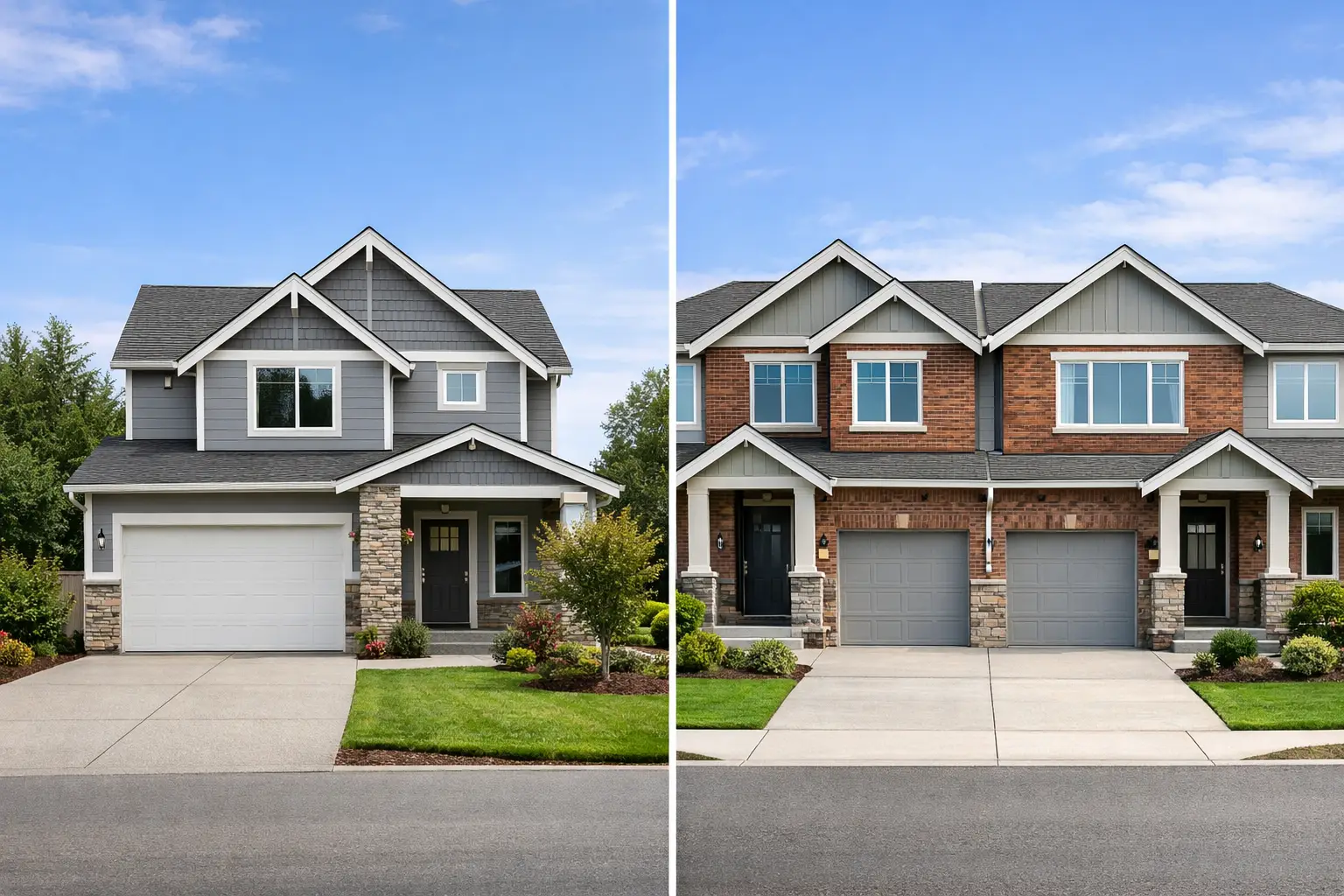
A detached home stands entirely on its own lot and does not share any walls with a neighbouring property. A semi-detached home shares one common wall with the home next door, but each side is still separately owned.
That difference sounds simple, but it affects a lot more than curb appeal. It can shape your purchase price, monthly carrying costs, yard size, renovation options, privacy, and even how the property performs when it's time to sell.
In many neighbourhoods, especially where affordability matters, buyers compare these two property types closely because they often sit in the same search range. A semi-detached home may let you enter a stronger location sooner. A detached home may give you more independence and future upside if your budget allows.
Cost is usually the first dividing line
For most buyers, price is the clearest distinction between detached versus semi detached homes. Detached homes typically cost more because you're buying a fully separate structure and often a larger lot. That higher price can also mean higher property taxes, insurance, utility costs, and maintenance expenses.
A semi-detached home is often the more approachable option if you want more space than a townhouse or condo but are not ready to stretch into detached-home pricing. That gap can matter in competitive markets where even a modest jump in purchase price changes your mortgage payment, down payment target, and overall comfort level.
This is where the conversation should stay practical. If buying detached means becoming house-poor, the extra privacy may not feel worth it. If the price difference is manageable and you plan to stay put for years, the detached option may make more sense.
Think beyond the mortgage payment
The monthly payment is only part of the picture. Detached homes usually come with more exterior upkeep, more yard work, and potentially more repair responsibility. Roof, siding, fencing, landscaping, and snow removal all fall fully on you.
With a semi-detached home, some of those costs may still be similar, but the property is often a bit more manageable. For busy families, first-time buyers, or downsizers who still want freehold ownership, that can be a real advantage.
Privacy and noise are where preferences get personal
Privacy is one of the biggest reasons buyers lean toward detached homes. No shared wall means less chance of hearing a neighbour's TV, footsteps, music, or daily routines. You also usually get more separation outdoors, which can make your backyard feel more private and peaceful.
That said, not every semi-detached home feels noisy, and not every detached home feels private. Construction quality matters. So does the layout. A well-built semi with smart room placement can feel quieter than buyers expect, while a detached home on a tight lot may still leave you looking directly into the next backyard.
If you work from home, have young kids, value quiet, or simply prefer more separation, detached may feel worth the premium. If you're comfortable sharing one wall and the home checks the right boxes in every other way, a semi-detached property can still offer a very comfortable living experience.
Lot size, layout, and flexibility
Detached homes often provide more freedom when it comes to lot use and future changes. You may have more space for parking, storage, landscaping, additions, or outdoor entertaining. If you're thinking long term, that extra flexibility can be a major plus.
Semi-detached homes can still offer good functional space, but the lot is often narrower, and your options may be more limited. That does not mean it is restrictive in every case. Many semis have excellent layouts, finished basements, and surprisingly usable backyards. But if you know you want a large garden, a pool, a workshop, or a major expansion later, detached is usually better positioned for that.
Renovation plans matter more than buyers think
If you expect to renovate, compare not only the home itself but also the practical limits of the lot and structure. A detached home may give you more design flexibility and fewer concerns about how work affects the neighbouring property. A semi-detached home can still be updated beautifully, but shared-wall construction can make some projects more complicated.
This is especially relevant for buyers thinking about basement apartments, multi-generational living, or maximizing future resale appeal. The structure you choose now can shape your options later.
Resale value depends on the buyer pool in your market
Detached homes often carry broader appeal because many buyers see them as the classic upgrade. They tend to attract people who prioritize privacy, independence, and long-term family living. That can support strong demand, especially in neighbourhoods where detached inventory is limited.
Semi-detached homes, however, can also perform very well because they meet a large and growing segment of the market: buyers who want more space than a condo or townhome but need a price point below detached. In that sense, semis often sit in a very active part of the market.
So, which has better resale value? It depends on the area, price bracket, condition, and local demand at the time you sell. In parts of the GTA and Durham Region, semi-detached homes can be especially attractive because they offer a more affordable path into established communities. Detached homes may still command stronger headline prices, but a well-priced semi can draw significant attention because of its accessibility.
Lifestyle fit should lead the decision
When buyers get stuck, I often suggest they stop asking which property type is better and start asking which one fits their actual life.
If you want maximum privacy, more outdoor space, and room to grow into the home over time, a detached home is usually the better fit. If you want to keep costs more manageable while still owning a freehold property with solid living space, a semi-detached may be the smarter move.
 Families with small children may value the extra yard and separation of a detached home. First-time buyers may prefer a semi-detached home that keeps them in a better school district or shorter commute.
 Investors may compare rental demand, carrying costs, and neighbourhood appreciation patterns before choosing one over the other.
Detached versus semi-detached homes in competitive markets
In higher-priced markets, this decision often becomes a trade-off between property type and location. Buyers may be able to afford a semi-
detached home in a more central or established neighbourhood, while a detached home at the same budget may require moving farther out or compromising on updates.
That is not a minor trade-off. Location affects commute times, school access, future resale, and daily convenience. A semi-detached home in the right neighbourhood can be a much stronger overall purchase than a detached home in an area that does not suit your needs.
This is why search strategy matters. Looking only at property type can narrow your options too early. Looking at the full picture gives you a better chance of finding the right fit.
That is not a minor trade-off. Location affects commute times, school access, future resale, and daily convenience. A semi-detached home in the right neighbourhood can be a much stronger overall purchase than a detached home in an area that does not suit your needs.
This is why search strategy matters. Looking only at property type can narrow your options too early. Looking at the full picture gives you a better chance of finding the right fit.
What to look at before making an offer
Once you've narrowed the choice, compare the homes in practical terms. Listen for noise during showings. Check the lot lines and outdoor usability. Look at parking, storage, and how the interior layout actually functions for your household. Consider how long you plan to stay and whether the home will still work if life changes.
It also helps to look at recent sales of both detached and semi-detached homes in the same neighbourhood. That gives you a clearer sense of what the market is rewarding and where your money is going. A local advisor can help you spot whether the detached premium in a given area is justified or whether a semi-detached home offers stronger value.
If you're buying with a clear budget and realistic expectations, both property types can be excellent options. The goal is not to chase a label. The goal is to buy a home that supports your finances, your lifestyle, and your next move with confidence.
If you're comparing homes and feeling stuck between what looks ideal on paper and what feels right in real life, that's usually where good guidance makes the biggest difference.
About the author:

Fanis Makrigiannis is a trusted Realtor® with Revel Realty Inc., specializing in buying, selling, and leasing homes, condos, and investment properties. Known for his professionalism, market expertise, and personal approach, Fanis is a Real Estate agent in the Durham region and is committed to making every real estate journey seamless and rewarding.
He understands that each transaction represents a significant milestone and works tirelessly to deliver outstanding results.
With strong negotiation skills and a deep understanding of market trends, Fanis fosters lasting client relationships built on trust and satisfaction.
Proudly serving the City of Toronto • Ajax • Brock • Clarington • Oshawa • Pickering • Scugog • Uxbridge • Whitby • Prince Edward County • Hastings County • Northumberland County • Peterborough County • Kawartha Lakes